The story of the WWII Camp Columbia in Brisbane did not end with the departure of Allied military forces after the Second World War. In the decades that followed, the vast wartime complex at Wacol entered a new phase of history closely linked to Australia’s post-war migration program and the arrival of thousands of European migrants — including many Dutch families.
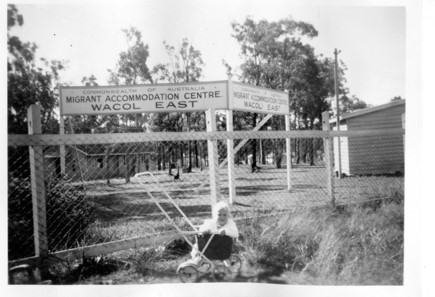
For the Dutch Australian community, the Wacol Migrant Centre forms an often-overlooked but important part of the broader Dutch–Australian wartime and post-war story. A site once associated with the Netherlands East Indies Government-in-Exile and Dutch wartime operations later became one of Queensland’s principal gateways for Dutch migration to Australia.
During WWII, Camp Columbia had served as a major Allied military installation. The camp became particularly significant to the Netherlands after 1944, when the Netherlands East Indies Government-in-Exile moved its headquarters to Wacol from Melbourne. Dutch military units, administrative personnel and support services operated from the camp as part of the Allied war effort against Japan.
After the war much of the military infrastructure became surplus to requirements. At the same time Europe faced widespread devastation, housing shortages and social upheaval. Australia responded with an ambitious immigration program designed to increase the country’s population and workforce under the policy commonly described as “populate or perish”.
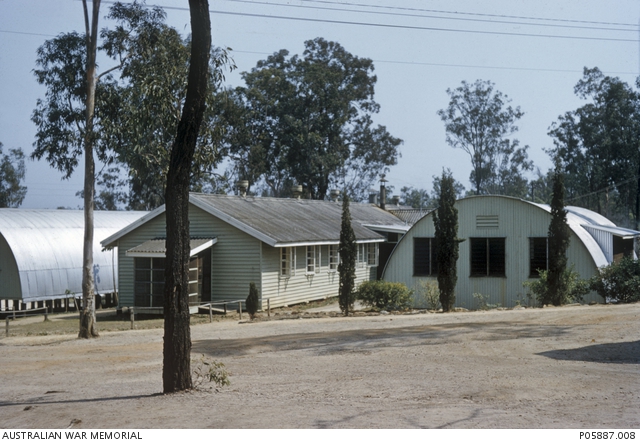
Former military camps across Australia were converted into migrant reception centres. At Wacol, sections of the former Camp Columbia area were adapted in 1949 into the Wacol East Displaced Persons Holding Camp. Refugees and displaced persons from war-torn Europe began arriving after years spent in camps across Germany, Austria and elsewhere.
In the early years the arrivals were mainly displaced persons from Eastern and Central Europe. However, by the early 1950s increasing numbers of assisted migrants from Western Europe also began arriving, including large numbers from the Netherlands.
The facility soon became officially known as the Wacol Migrant Centre and grew into the largest migrant reception centre in Queensland. Although designed for around 1,600 residents, numbers at times approached 2,000.
For many Dutch migrants, Wacol became their first experience of life in Australia.
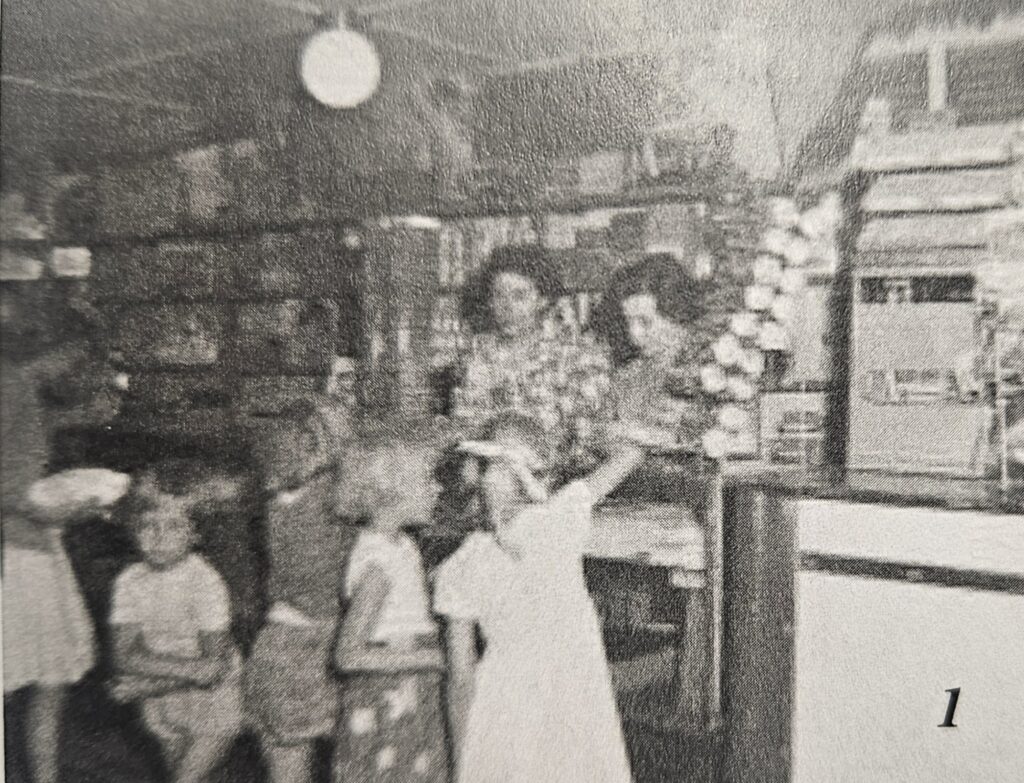
The post-war migration agreement between Australia and the Netherlands led to tens of thousands of Dutch migrants settling across Australia during the 1950s and 1960s. Queensland attracted many Dutch families because of employment opportunities, agriculture, construction work and the warmer climate.
Upon arrival, many Dutch migrants were temporarily housed at Wacol before being allocated employment or finding permanent accommodation elsewhere in Queensland.
The accommodation reflected the site’s wartime origins. Families lived in converted timber army barracks and former military huts originally built for Allied troops. Conditions were basic. Small cubicles within larger huts provided limited privacy, while kitchens, laundries and amenities were generally communal.
Despite the modest conditions, many Dutch migrants later remembered the camp with mixed feelings of uncertainty, camaraderie and optimism. For families arriving after years of wartime hardship and post-war reconstruction in the Netherlands, the migrant centre represented the beginning of a new life.
Like other migrant hostels across Australia, Wacol also became a place of cultural exchange. Dutch migrants lived alongside people from many other European backgrounds, including Poles, Latvians, Ukrainians, Italians, Germans, Greeks and Maltese migrants.
English-language classes, employment placement services and social activities were organised to assist new arrivals in adapting to Australian society. Many Dutch migrants soon found work in Queensland industries, railways, construction, manufacturing and agriculture.
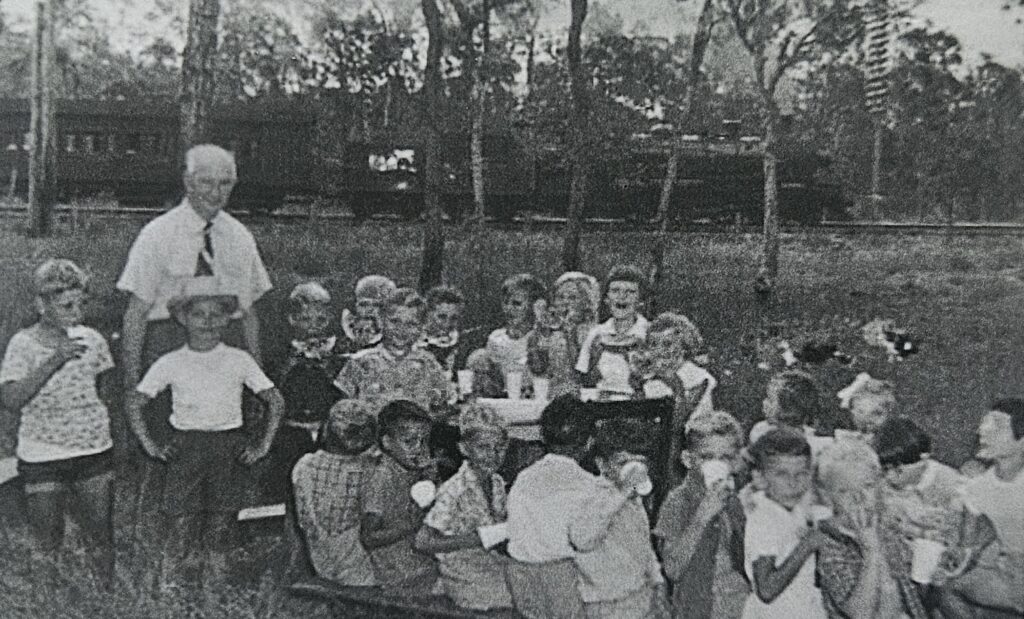
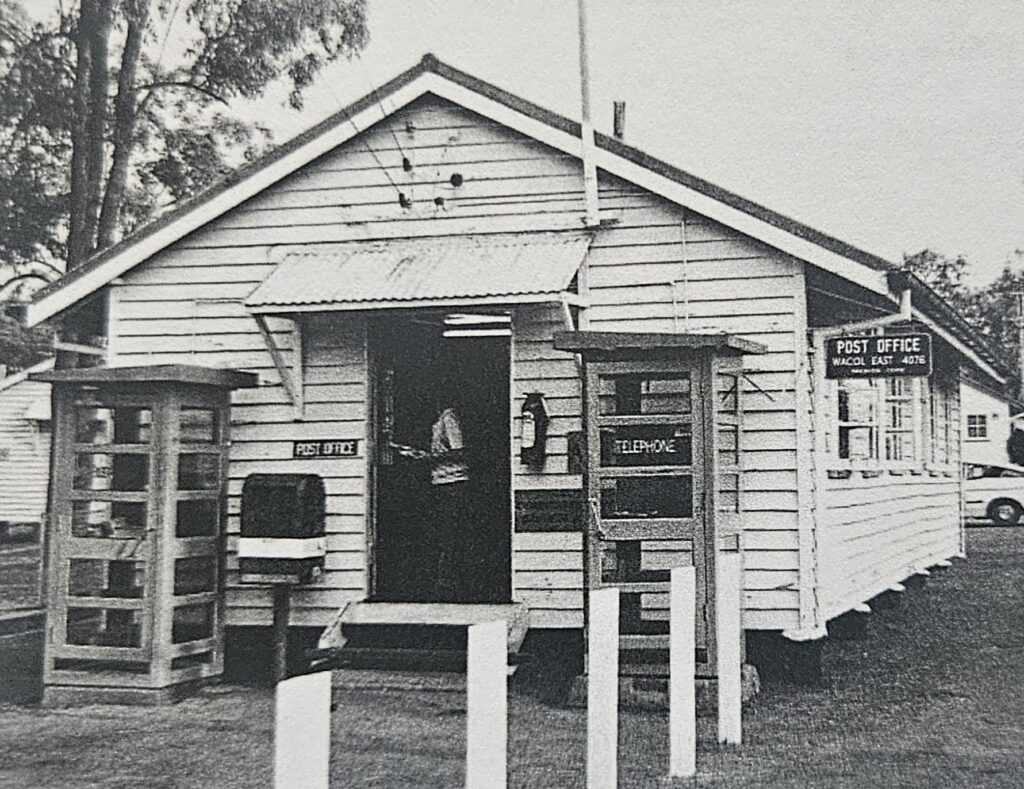
The Wacol centre contributed significantly to the development of Dutch community life in Queensland. Many Dutch families who first passed through the centre later settled in suburbs such as Darra, Oxley, Richlands and Inala, while others moved to regional centres across the state.
Over time Dutch clubs, churches, sporting organisations and social networks emerged throughout Queensland, helping migrants maintain elements of Dutch culture while integrating into Australian society.
The site also reflects another lesser-known continuity in Dutch–Australian history. The same broader Camp Columbia landscape that had once housed the Netherlands East Indies Government-in-Exile and Dutch wartime personnel later accommodated Dutch civilian migrants rebuilding their lives in Australia.
In this sense, the Wacol Migrant Centre forms part of a larger Dutch–Australian historical continuum linking war, displacement, migration and settlement.
Alongside the migrant centre, parts of the former camp area were also later used as emergency and transitional housing in what became known as the Wacol Housing Camp. Former military huts housed families facing housing shortages and social hardship during the post-war decades. Aboriginal families were among those accommodated there, adding another important social and historical layer to the broader Camp Columbia landscape.
By the 1980s the old wartime buildings had deteriorated significantly and Australia’s immigration policies were changing. Large communal migrant hostels were increasingly regarded as outdated.
The Wacol Migrant Centre and the nearby Willie Mackenzie Hostel closed in 1987. Much of the area later became part of Queensland’s correctional precinct, including the opening of the Arthur Gorrie Correctional Centre in 1992.
Today little remains of the original migrant centre infrastructure. Yet for thousands of Dutch migrants and other post-war arrivals, Wacol represented the first step in building a new life in Australia.
The history of the Wacol Migrant Centre demonstrates how the Camp Columbia site evolved far beyond its wartime origins. It became not only a place of military history, but also part of the broader story of migration, multiculturalism and Dutch settlement in Queensland and Australia.
Wacol Migrant Centre Remembered 1949-1987
Many Dutch people were among the post-war migrants.
In 2001 the idea was born to create a commemorative symbol of the Wacol Migrant Centre and the Federal Government financed the publication of a book with some 150 interviews with refugees and migrants. Among them 27 interviews with Dutch migrants. The interviews with the Dutch people have been republished in the DACC Hub with the permission from the Federal Government, the copyright holder. The are listed in order of arrival.
Can you help us?
We are keen to receive stories, photographs, documents and memories from people who stayed at this migrant centre. With your permission, we would be delighted to include them in this article, helping to preserve this important chapter of Australia’s and the Dutch-Australian community’s migration history.
This article is part of a series on migration camps: Dutch Migration Gateways to Australia
Other links:
Netherlands Association of Queensland and Dutch Shop De Kruidenier.
Prins Willem Alexander Retirement Village
Personal Stories
Michael Strik
Michael Strik
Johanna Edwards
Annie and Joop Vierveyzer
Matha Johanna Fuchshuber – nee Van Lunteren
Sonja Mullenberg – nee van den Berg
Ben Dokter
Harmina Dijk – nee Pesman
Helena Koning
Elisabeth Meuleman
Herma Long
Theo Sloots Jnr
Nel Bruyniks
Han Spykerboer
Ruth van Lunteren – nee Muller
Rolf Bierman
Anthony and Elizabeth Schagen
Jacoba Oliver
Catherina Vullers
Herman Wichgers
Rob-Jan and Jacomiene Mijnarends
Corry de Haas
Kitty Cillikens
Lily Podger – nee Kuiper
Carel Vogelsang
Ken and Els Gray