Batchelor Airfield, approximately 100 kilometres south of Darwin, became the principal wartime base of No. 18 (Netherlands East Indies) Squadron RAAF. From May 1943 until its departure for Balikpapan in July 1945, the joint Dutch–Australian squadron flew B-25 Mitchell bombing, reconnaissance and anti-shipping operations from Batchelor against Japanese forces across the eastern Netherlands East Indies.
No. 18 Squadron brought together Dutch, Indonesian and Australian personnel. Its aircraft carried Netherlands East Indies markings and N5 registration numbers, while the RAAF supplied many of its air gunners, ground staff and other specialists.
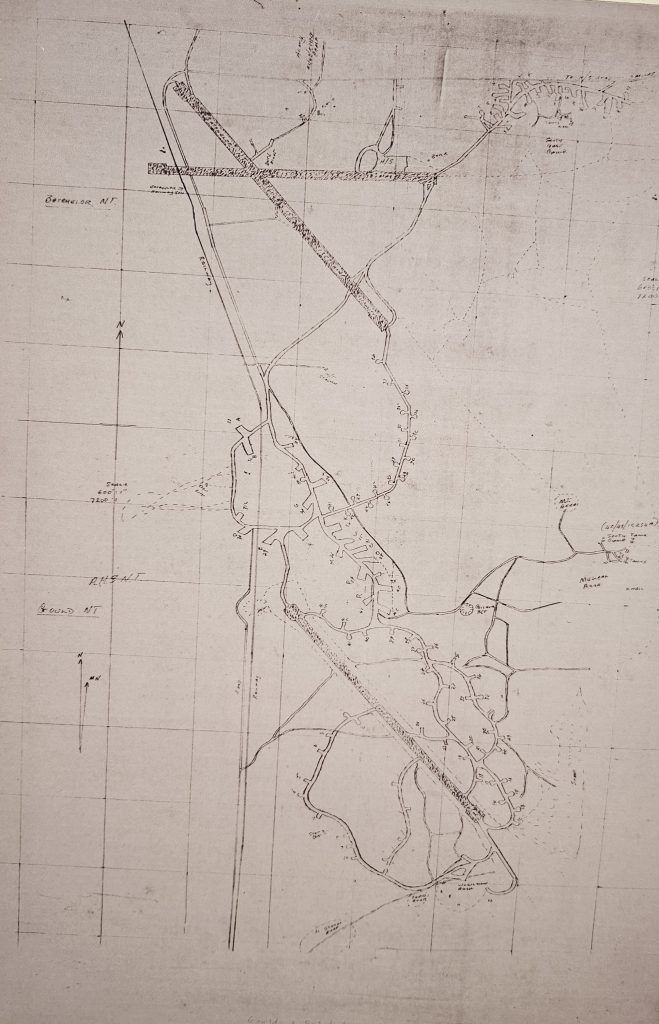
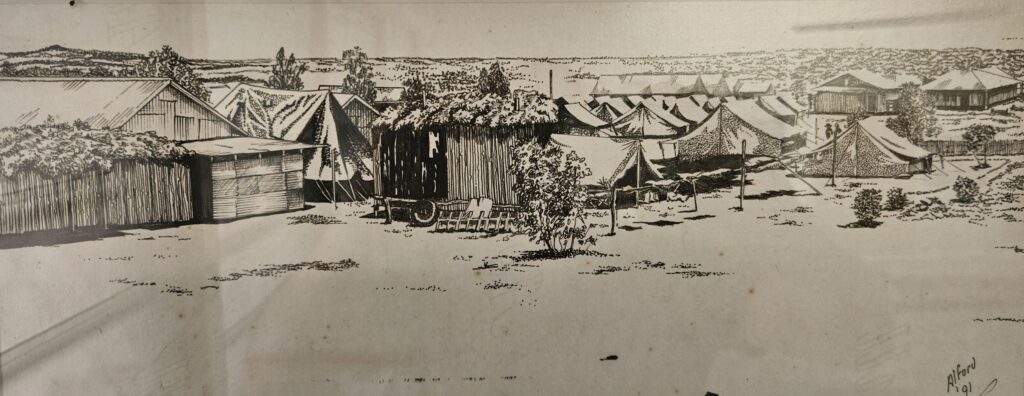
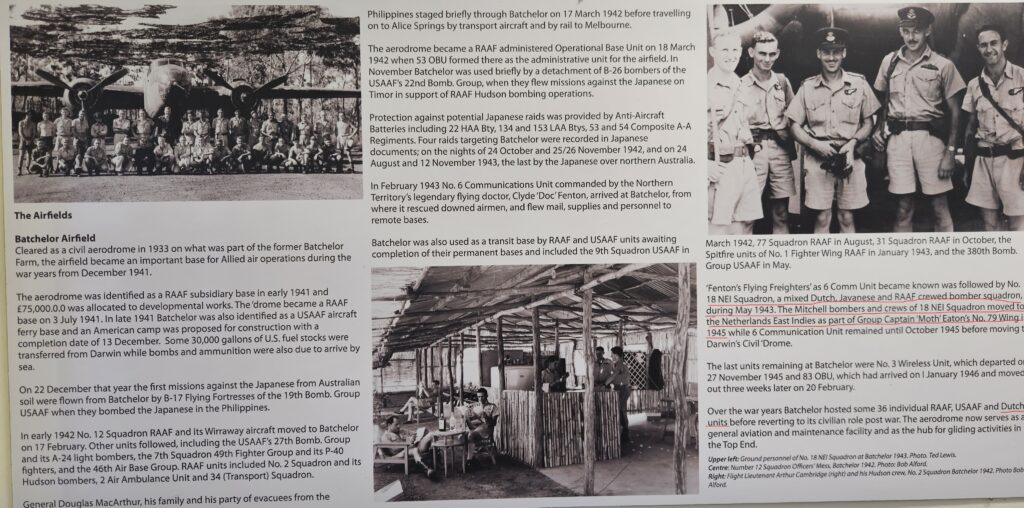
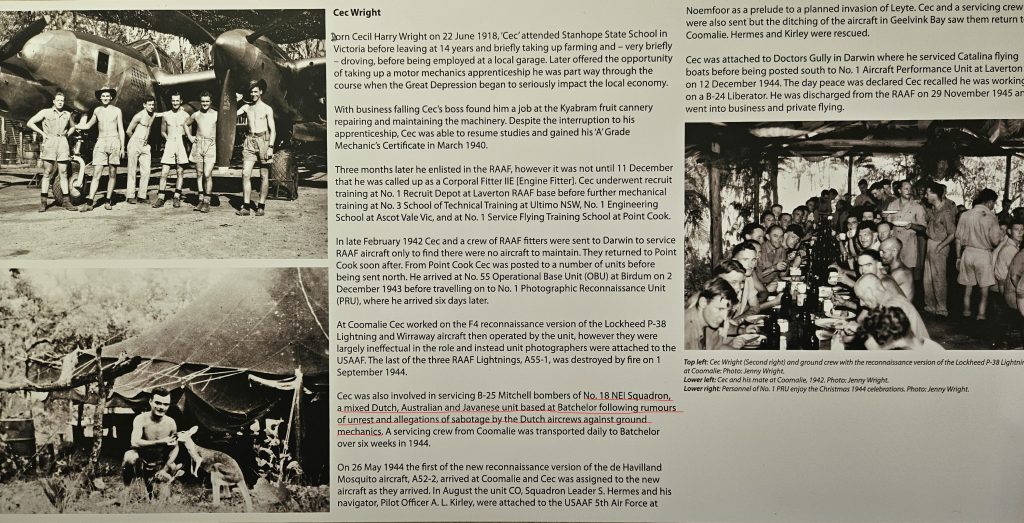
Batchelor Airfield during the war
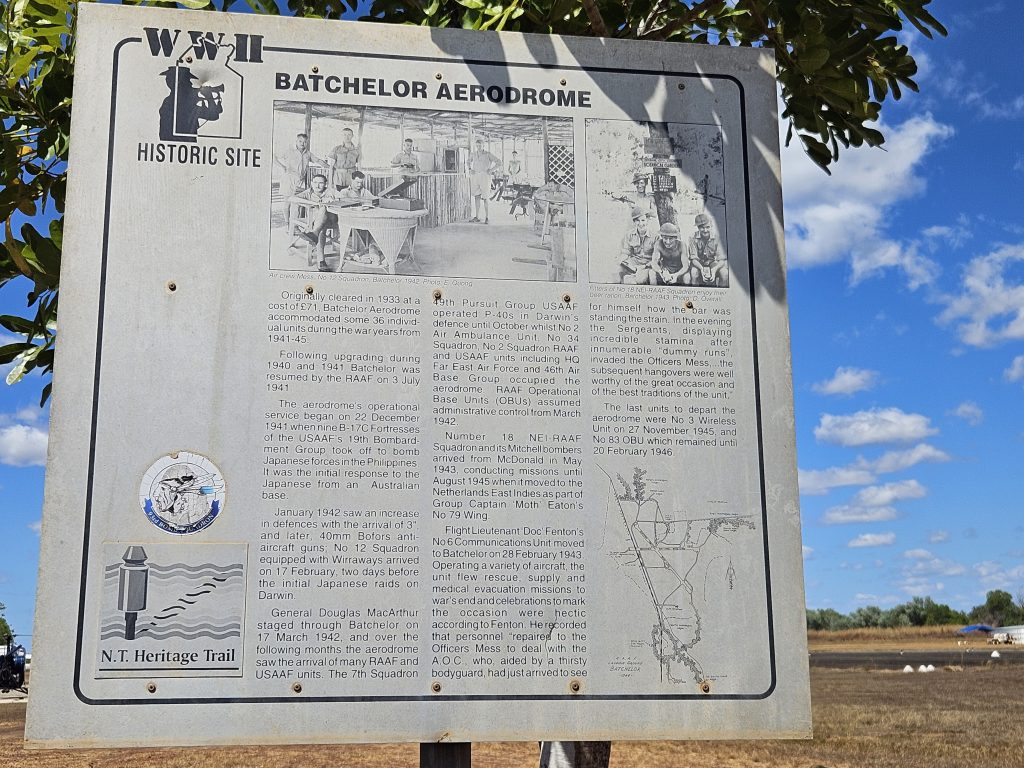
Batchelor had been cleared as a civil aerodrome in 1933 and became a RAAF base in July 1941. During the Pacific War it was used by numerous Australian and American units, including bomber, fighter, transport, communications and air-ambulance units.
The aerodrome’s location south of Darwin placed it within reach of targets in Timor and the eastern Netherlands East Indies. Although living conditions remained basic, Batchelor offered No. 18 Squadron better facilities and a more suitable operational location than its previous base at McDonald Airfield.
No. 18 Squadron moves to Batchelor
No. 18 Squadron had moved from Canberra to McDonald Airfield during December 1942 and January 1943. Its first bombing operation from McDonald, against Dili in Japanese-occupied Timor, took place on 31 January 1943.
McDonald’s undeveloped facilities, unreliable water supply, difficult runway and distance from the squadron’s operational area made it an important but temporary base. Between April and May 1943 the squadron transferred to Batchelor, with the relocation completed during May.
From Batchelor, the squadron’s B-25 Mitchells undertook:
- bombing attacks against Japanese airfields and installations;
- reconnaissance missions;
- low-level attacks against Japanese shipping;
- patrols over Timor, the Tanimbar, Kai and Aroe islands, and other parts of the eastern Netherlands East Indies;
- leaflet-dropping operations; and
- later missions connected with locating and supplying Allied prisoners of war.
The Mitchells frequently operated close to the limit of their range. Low-level attacks against shipping were particularly dangerous, and the squadron suffered significant Dutch, Indonesian and Australian casualties.
In March 1944, the squadron temporarily deployed to Exmouth Gulf in Western Australia in response to reports of a possible Japanese naval attack. When the threat did not eventuate, its aircraft returned to Batchelor and resumed operations over the Netherlands East Indies.
A joint Dutch–Australian squadron
Although commonly described as a Dutch squadron, No. 18 Squadron was a genuinely combined unit. Dutch officers commanded the Netherlands East Indies component, while Australians filled many aircrew, technical and administrative positions.
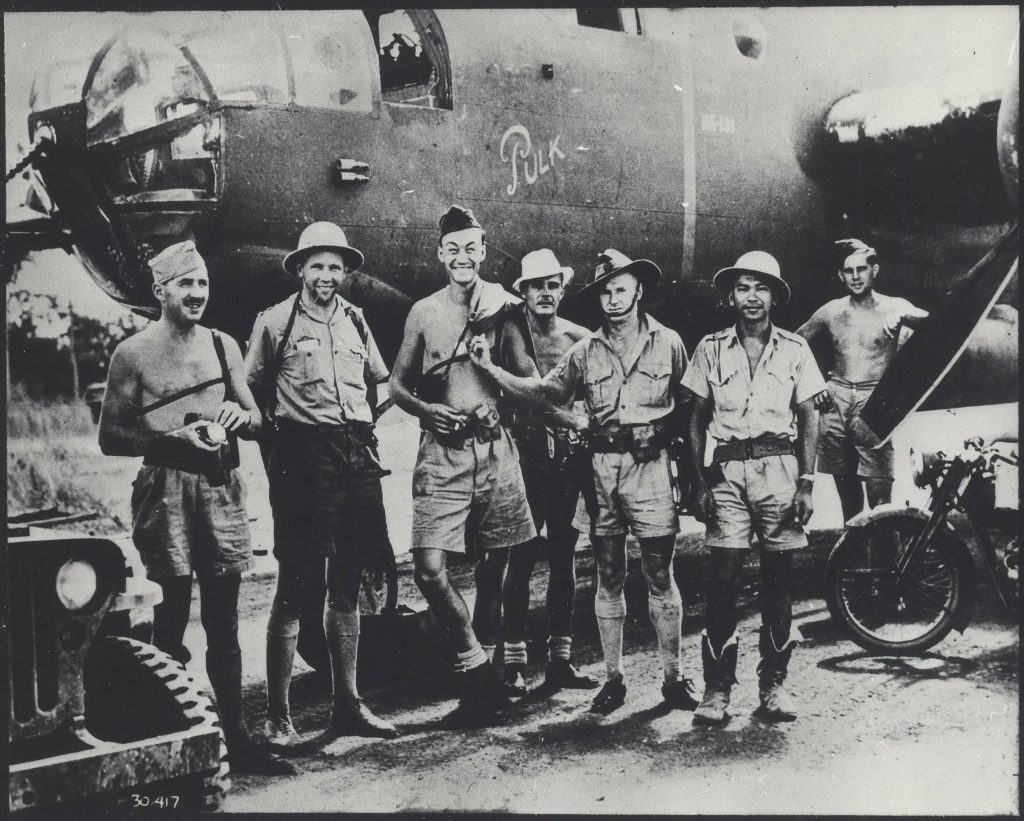
Australian personnel maintained the Mitchell bombers and frequently served as wireless operators and air gunners alongside Dutch and Indonesian airmen. Dutch and Indonesian personnel also worked in aircraft servicing, communications, administration and the other duties required to keep the squadron operational.
This close cooperation made Batchelor one of the most important locations in the shared Dutch–Australian air war.
Life at Batchelor
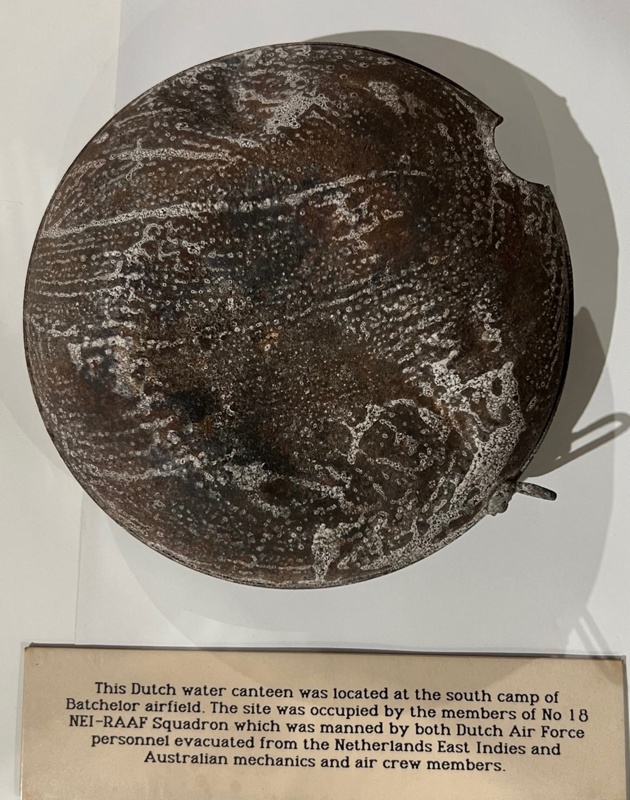
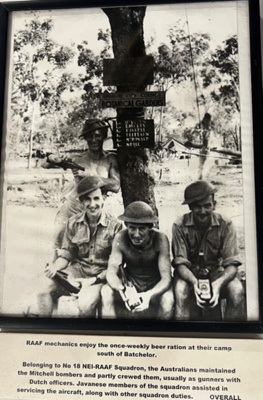
Belonging to No 18 NEI-RAAF Squadron, the Australians maintained Mitchell bombers and party crewed them, usually as gunners with Dutch officers whose members of the squadron assisted in servicing the aircraft, along with other squadron duties. OVERALL. Photo on display at Darwin Aviation Museum
Living and working conditions remained difficult. Personnel were accommodated in huts and tents, and the tropical wet season brought intense heat, humidity, heavy rain, mosquitoes and flies. Aircraft servicing and the handling of fuel, bombs and ammunition continued under these conditions.
A photograph displayed at the Batchelor Museum shows Australian ground personnel of No. 18 Squadron enjoying their weekly beer ration. Such photographs offer an important record of daily life behind the squadron’s operational missions.
Another one shows
Nearby Gould Airfield provided additional servicing and maintenance support. Batchelor formed part of a wider network of wartime airfields south of Darwin that also included McDonald, Pell, Gould, Fenton and other satellite fields.
Departure for the Netherlands East Indies
In 1945 No. 18 Squadron prepared to return to Netherlands East Indies territory. It moved first through Morotai and then to Balikpapan, from where its B-25 Mitchells operated from July 1945.
Its later missions included dropping leaflets and delivering food and medical supplies to Allied prisoners of war. The RAAF component of the squadron was disbanded in November 1945, and the unit formally returned to Dutch control in January 1946.
Batchelor’s Dutch wartime heritage
The Batchelor Museum preserves photographs, displays and other material relating to the aerodrome and No. 18 Squadron. These records help document both the squadron’s combat operations and the everyday experiences of the Dutch, Indonesian and Australian personnel stationed there.
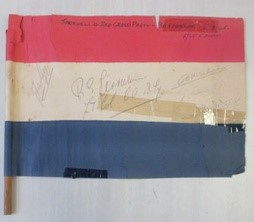
A paper Netherlands flag now held by the Darwin Aviation Museum bears the handwritten inscription:
“FAREWELL & RED CROSS PARTY – BATCHELOR 6-8-45 / F/SGT C. HINKINS.”
The flag is a small but valuable record of the ceremonies and personal relationships associated with the squadron’s departure from Batchelor.
A visit to Batchelor
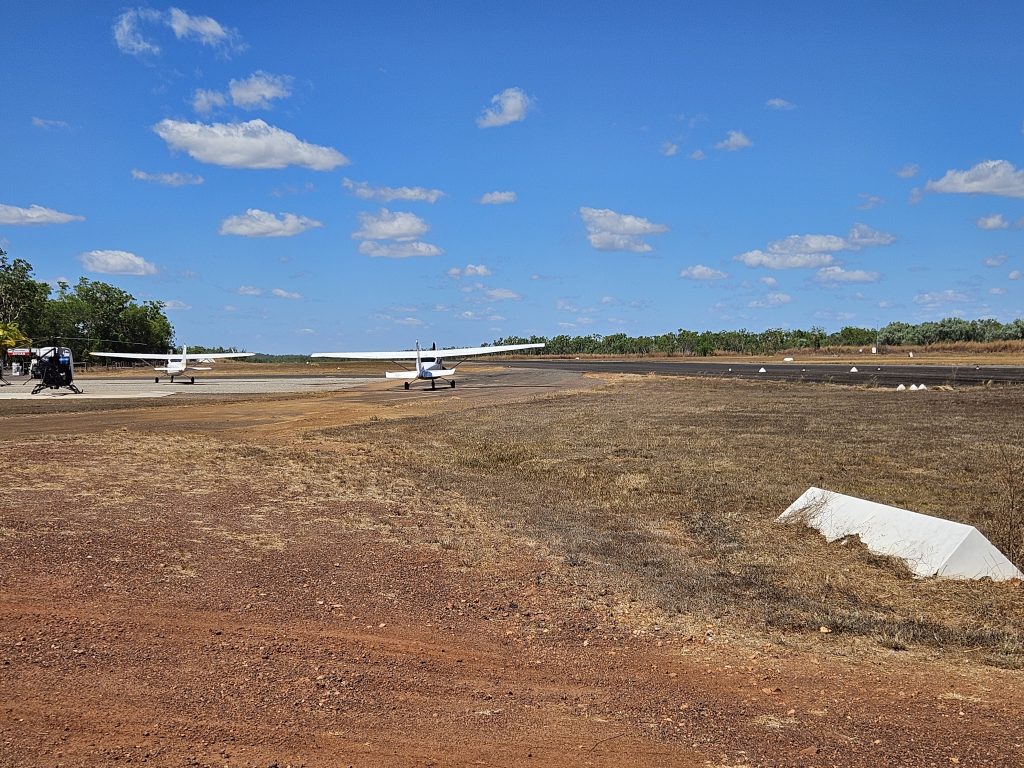
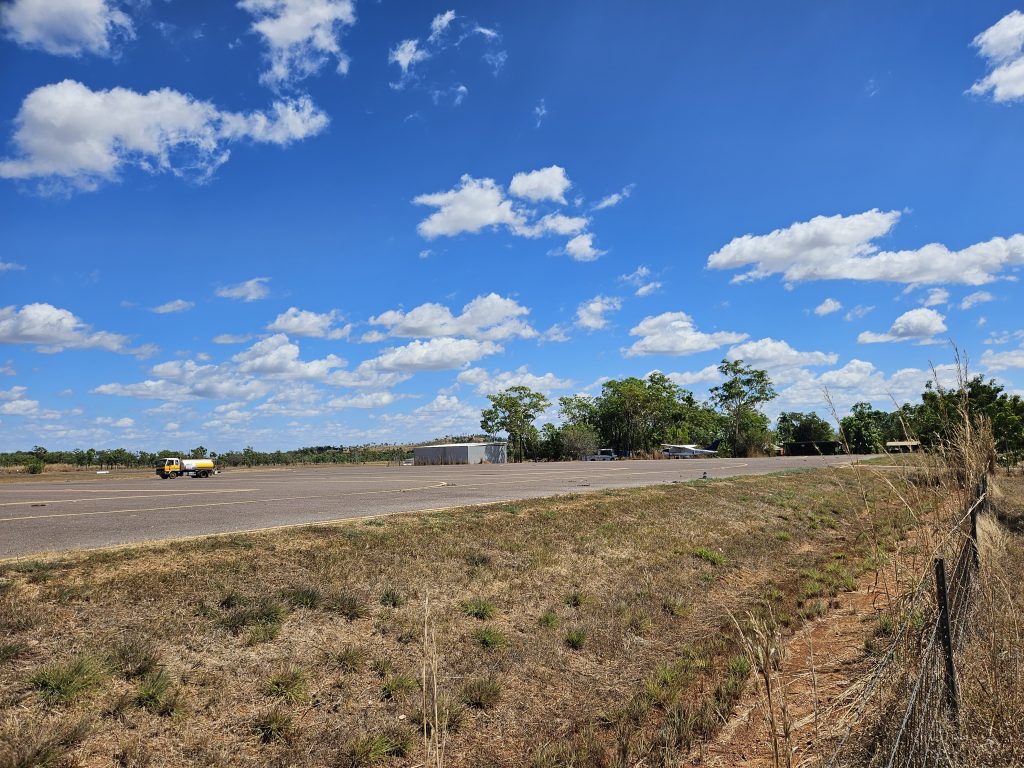
I visited Batchelor in August 2023 to see the former wartime airfield and the local museum. It was remarkable to find that the historic airstrip is still there and remains in use, more than eighty years after it supported Dutch, Indonesian, Australian and American wartime personnel. Standing beside the runway helped bring the history of No. 18 (Netherlands East Indies) Squadron much closer to life and demonstrated how much physical evidence of Batchelor’s wartime aviation history remains in the landscape.
Document from the DACC collection
The following document, associated with Jan Staal and dated 1 April 1944, relates to the Dutch presence at Batchelor during No. 18 Squadron’s operational period. It is retained here as part of the documentary record of the squadron and its personnel.
Document from the DACC collection
The following document, associated with Jan Staal and dated 1 April 1944, relates to the Dutch presence at Batchelor during No. 18 Squadron’s operational period. It is retained here as part of the documentary record of the squadron and its personnel.
Related articles
- No. 18 (Netherlands East Indies) Squadron moves to McDonald Airfield, 1942–1943
- The 18 Netherlands East Indies Squadron RAAF – WWII – artefacts added from Darwin Aviation Museum
- Dutch WWII casualties from air operations from the Northern Territory
- Research Portal—Dutch and Netherlands East Indies Air Forces in Australia during World War II
Sources and further reading
- Australian War Memorial—No. 18 (Netherlands East Indies) Squadron RAAF
- Australian War Memorial—No. 18 Squadron and the Dutch–Australian air war
- Batchelor Museum—Batchelor during the war years
- O.G. Ward, De Militaire Luchtvaart van het KNIL in de jaren 1942–1945.