A pioneering Netherlands East Indies airline
The Koninklijke Nederlandsch-Indische Luchtvaart Maatschappij, commonly known as KNILM, was the principal civil airline of the Netherlands East Indies.
It was established on 16 July 1928, initially as the Nederlandsch-Indische Luchtvaart Maatschappij. The company later received the royal designation Koninklijke. Despite the similarity of their names, KNILM was not a subsidiary of KLM Royal Dutch Airlines.
KNILM’s legal headquarters were in Amsterdam, while its principal office in the Netherlands East Indies was located at Tjililitan Airfield in Batavia, now Halim Perdanakusuma International Airport in Jakarta. Its main operational and technical base was at Andir Airport in Bandung, which was also closely connected with the military aviation service of the Royal Netherlands East Indies Army.
KNILM developed an extensive network across the Netherlands East Indies and neighbouring countries. Its aircraft carried passengers, mail and freight between Java, Sumatra, Borneo, Bali, Singapore and other regional destinations.
Early aviation links with Australia
The increasing range and reliability of passenger aircraft created opportunities for faster communications between the Netherlands East Indies and Australia.
In May 1931, KNILM provided the Fokker aircraft Abel Tasman for an experimental postal flight from Batavia to Melbourne. Captain Maurits Pattist completed the journey in eight days. The trial demonstrated that an air service could substantially reduce the time required to carry mail between Europe, the Netherlands East Indies and Australia.
Negotiations for regular services nevertheless proceeded slowly. The proposed route had both commercial and political implications because British Imperial Airways already operated services connecting Britain and Australia. The faster Dutch service represented potential competition within an aviation network strongly influenced by British imperial interests.
The first regular KNILM service to Sydney
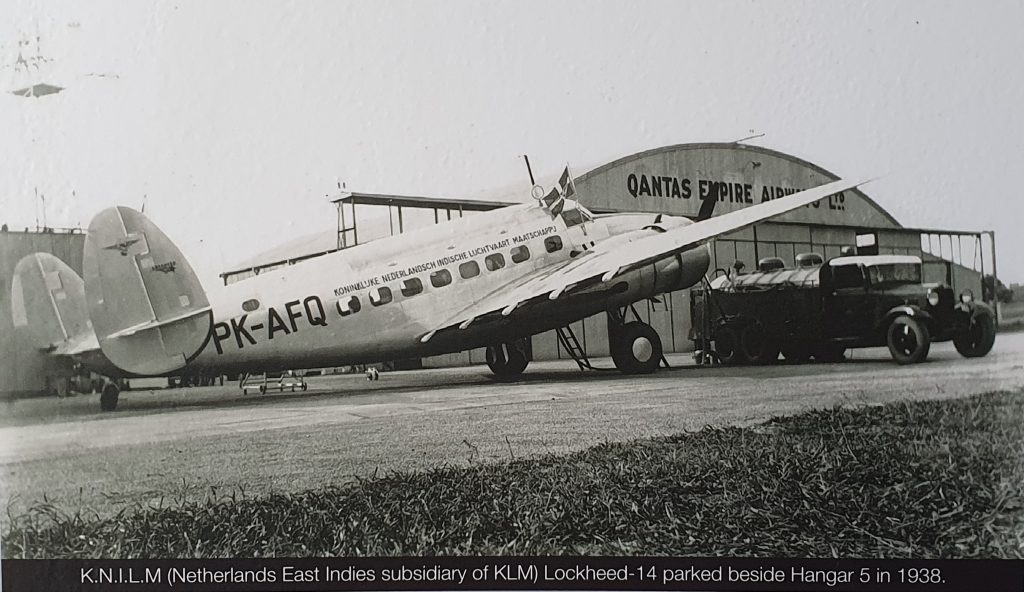
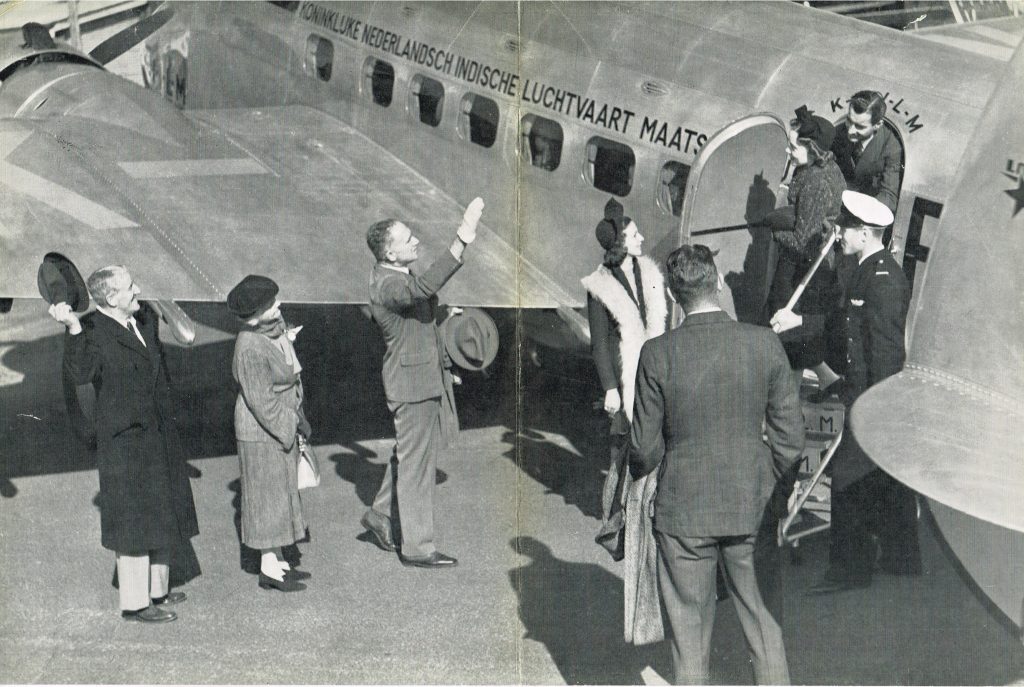
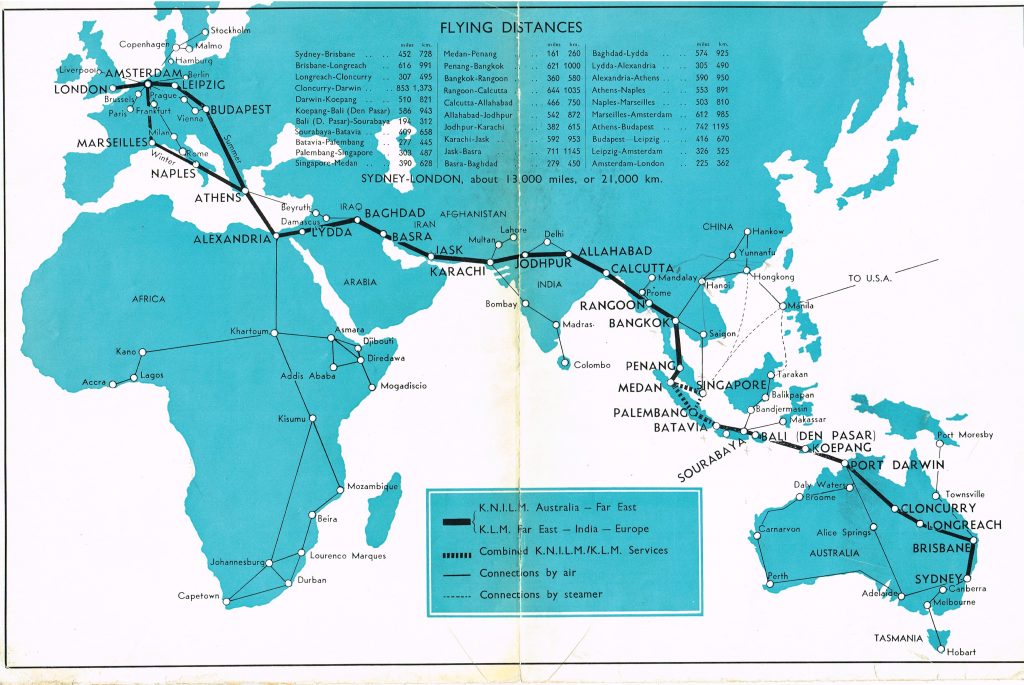
On 3 July 1938, KNILM inaugurated its regular service between Batavia and Sydney. The route included stops at locations such as Surabaya, Denpasar in Bali, Kupang in Timor, Darwin, Cloncurry, Longreach, Brisbane and Sydney.
Archerfield Airport was the Brisbane stop on KNILM’s pioneering service between the Netherlands East Indies and Sydney. The photograph below shows a KNILM Lockheed 14 Super Electra at Archerfield in 1938, standing in front of the Qantas hangar. It records the beginning of the regular civil aviation connection that would later give Archerfield an important place in Dutch–Australian wartime aviation history.
The inaugural flight was made in Lockheed 14 Super Electra PK-AFM. Its crew included:
- Captain Gerson van Messel;
- co-pilot Frans van Breemen;
- flight engineer H. Veen; and
- navigator W. Verheyen.
Passengers included Major W.C.J. Versteegh, KNILM flight superintendent; B. van Lent of the Netherlands aviation authorities; J. de Bree, head of KNILM’s technical service; Van Os van Delden, who was joining the Australian staff of KLM and KNILM; and C.W. Grugan of the Lockheed Aircraft Corporation.
The service provided a direct civil aviation connection between the Netherlands East Indies and Australia. Passengers travelling onward to Europe transferred at Batavia to KLM’s intercontinental service.
The journey between Batavia and Brisbane generally took approximately three days and included overnight stops. A single ticket from Batavia to Brisbane cost approximately £55, while a return fare was about £99—a considerable expense at the time.
KNILM used Lockheed 14 aircraft carrying approximately eight passengers before introducing Douglas DC-3s, which offered greater capacity and passenger comfort.
Gerson van Messel’s 1939 record
Captain Gerson van Messel became one of the most prominent figures connecting KNILM’s prewar operations with the later Dutch military transport service in Australia.
In January 1939, Australian newspapers reported that he had flown from Darwin to Sydney during daylight in 12 hours and 12 minutes.
On the return journey, the aircraft departed Sydney at 5.50 a.m., reached Brisbane at 7.21 a.m., departed at 8.13 a.m., reached Cloncurry at 12.50 p.m. and arrived at Darwin at 5.32 p.m. local time. The aircraft averaged approximately 191 miles per hour.
Van Messel later became an important commander and pilot within the Netherlands East Indies military transport organisation at Archerfield.
Expansion of the service
KNILM continued expanding its Australian connection. In June 1941, a goodwill flight to Sydney was made by Douglas DC-5 PK-ADB, again commanded by Gerson van Messel. An additional fuel tank was installed for the journey.
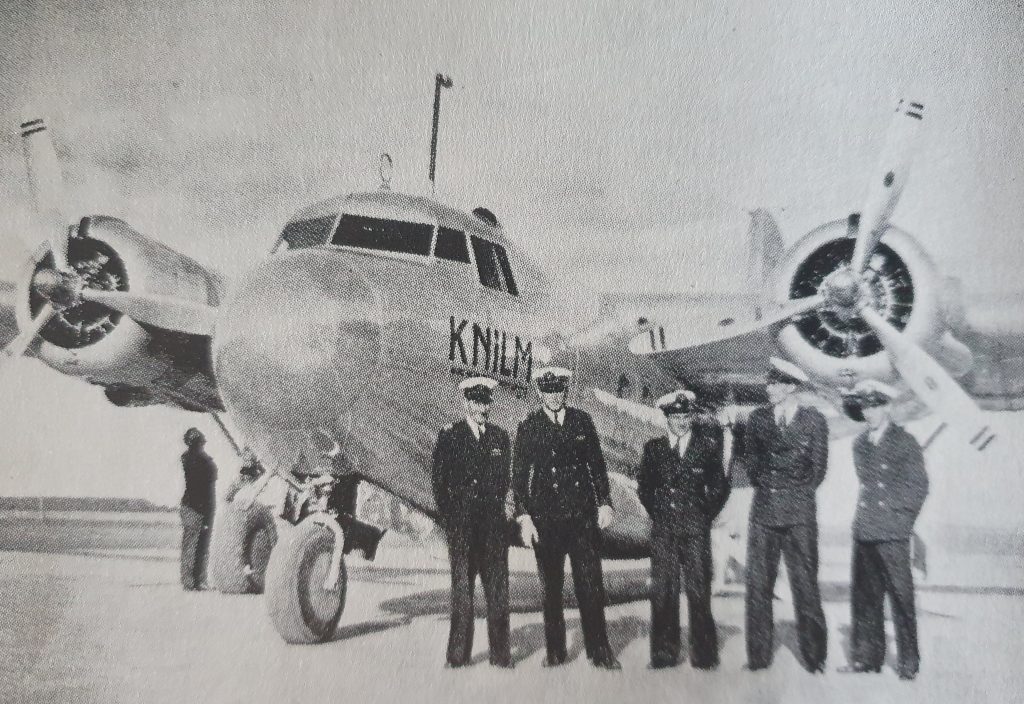
KNILM goodwill flight from Batavia to Sydney, June 1941. Captain Gerson van Messel is shown on the left. Source: G.J. Hagens, Source: De KNILM vloog door.
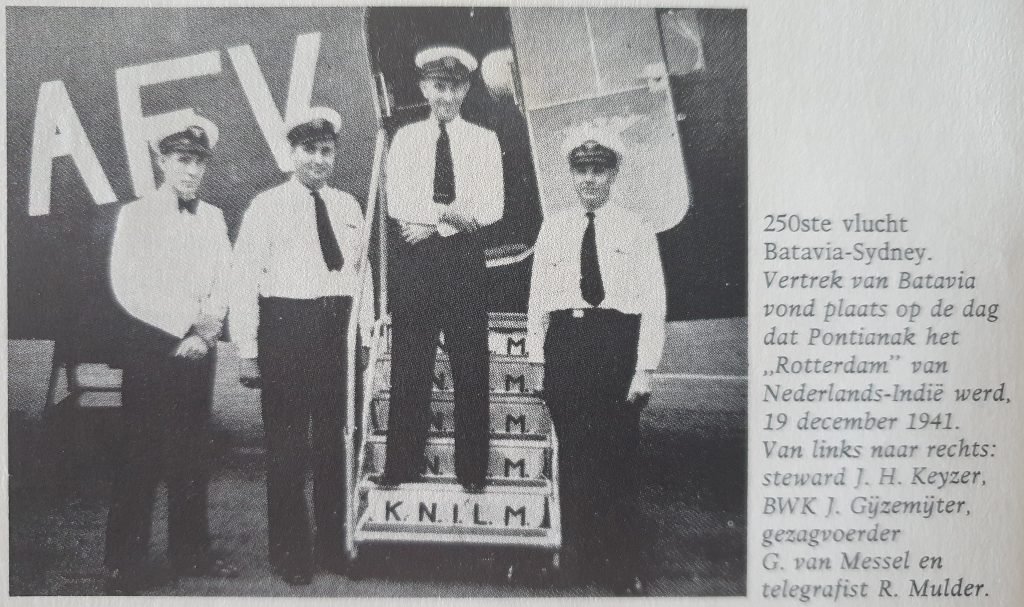
By 1941, KNILM operated approximately 25 of its own aircraft and four aircraft associated with KLM. The growing threat of war reduced normal passenger operations, but military and government charter flights increasingly took their place.
Hubertus van Mook’s flight to the United States
In January 1942, Lieutenant Governor-General Hubertus van Mook travelled from the Netherlands East Indies through Australia and across the Pacific to the United States.
Van Mook held discussions with Australian authorities in Sydney and Melbourne and met Prime Minister John Curtin in Canberra. He then continued to the United States for discussions concerning the Japanese threat with President Franklin D. Roosevelt and American military officials.
This exceptional trans-Pacific journey followed a route KNILM had considered for a possible future extension of its service through New Zealand and Hawaii to the United States. Wartime circumstances, rather than commercial development, produced the first such flight.
War reaches the Netherlands East Indies
Japan’s entry into the Pacific War in December 1941 transformed KNILM’s operations. Its aircraft were placed increasingly at the disposal of the Netherlands East Indies military authorities and used to transport troops, government personnel, equipment and documents.
Normal services to Australia became increasingly dangerous. A proposed revised route from Bandung to Australia through Broome was considered early in February 1942.
A test flight took place on 17 February. Although intended partly to assess the route, it became part of the developing evacuation effort.
On 19 February, a major movement of KNILM aircraft began. Aircraft departed from Batavia and Surabaya at intervals during the night, flying through Broome and onward across Australia. Routes included Daly Waters, Cloncurry and Charleville before reaching Brisbane or Sydney.
The aircraft carried KNILM staff and family members, essential government personnel, spare parts, military material and portions of the Netherlands East Indies government archives.
Approximately 200 KNILM staff members and relatives were reportedly evacuated during the initial operation, with further personnel following during the subsequent weeks. Many ground staff and their families could not be evacuated and were later interned by the Japanese.
The priority given to some KNILM employees and their families later became controversial because many other civilians remained behind.
Evacuation flights between Java and Australia
After unloading passengers and freight, some KNILM DC-3s returned toward Java and operated shuttle services between Bandung and Broome while this remained possible.
The worsening military situation made each flight increasingly dangerous. KNILM aircraft also assisted with the evacuation of government officials, military personnel and civilians from threatened locations.
Eleven KNILM aircraft ultimately escaped to Australia. They were dispersed among several Australian airfields and initially continued undertaking charter and military transport duties.
Senior KNILM staff and some family members assembled at the Australian Hotel in Sydney, while aircraft were brought to Sydney for maintenance or directed to other centres, including Archerfield.
KNILM at Archerfield
Archerfield became an important centre for KNILM aircraft and personnel during the chaotic months following the evacuation.
The airline’s crews flew between Brisbane and destinations across northern and eastern Australia, supporting the movement of personnel, freight and military supplies. Their experience operating through tropical weather and across areas with limited navigational support made them highly valuable.
The final regular KNILM service reached Australia in February 1942. What had begun as a pioneering international passenger and mail route had become an emergency evacuation and military transport network.
The wider history of the airfield and its Dutch presence is described in: The Dutch at Archerfield Airport, Brisbane
Transfer of the aircraft to the Americans
American forces in Australia urgently required transport aircraft. The Netherlands East Indies authorities lacked sufficient technical personnel, spare parts and organisational capacity to operate all the evacuated KNILM and KLM aircraft independently.
The Americans therefore sought control of the available civil aircraft. Although KNILM and some Dutch officials resisted, the Netherlands Government-in-Exile in London approved their transfer.
In May 1942, seven former KNILM aircraft were incorporated into the American transport unit operating from Archerfield. Three others were transferred to an American troop-carrier unit at Essendon in Melbourne. Another aircraft had been lost.
Only a small number of former KNILM personnel were initially taken into American service, despite their considerable experience. The resulting frustration contributed to a spectacular protest in which Dutch pilots flew aircraft in formation beneath the Sydney Harbour Bridge.
See: Dutch aircraft fly in formation under the Sydney Harbour Bridge—May 1942
What happened to the KNILM personnel?
The dispersal of KNILM’s aircraft did not end the contribution of its personnel.
Former employees followed several different paths:
- some travelled to the Royal Netherlands Military Flying School at Jackson, Mississippi;
- some subsequently joined No. 18 (Netherlands East Indies) Squadron RAAF;
- some joined the Royal Netherlands Navy Air Service or No. 321 (Dutch) Squadron RAF;
- some transferred to KLM operations in the Caribbean;
- some worked temporarily for Allied aviation organisations in Australia; and
- others later joined the Netherlands East Indies military transport services at Archerfield.
Many experienced KNILM personnel initially remained unemployed or underemployed because the American authorities did not immediately employ them as complete Dutch crews.
Their expertise nevertheless became indispensable when a Dutch transport organisation was established at Archerfield in January 1943.
From KNILM to the NEI transport services
Former KNILM and KLM pilots, wireless operators and flight engineers formed the core of the Transport Afdeeling Brisbane, also known as the NEI Transport Section Brisbane.
Working initially within the United States Fifth Air Force organisation, these crews flew Douglas C-47 aircraft from Archerfield to Townsville, Port Moresby and other destinations in New Guinea.
They also operated General Douglas MacArthur’s demanding night courier service between Brisbane and Port Moresby.
The transport organisation subsequently developed through Nos. 1 and 2 Netherlands East Indies Transport Squadrons into No. 19 (Netherlands East Indies) Squadron RAAF.
Former KNILM personnel who played important roles included Gerson van Messel, Iwan Smirnoff and Joop Gijzemijter.
Their complete wartime history is described in: Netherlands East Indies military air transport services in Australia, 1942–1947
See also: Joop Gijzemijter at the Netherlands East Indies Transport Service at Archerfield
Attempts to revive KNILM
KNILM effectively ceased operating as an independent airline in Australia during 1942, although the company continued to exist legally. Its administrative office moved to New York in 1943.
After Japan’s surrender, it was hoped that KNILM could resume civil aviation in the Netherlands East Indies. Political instability, damaged infrastructure and the Indonesian struggle for independence made the restoration of normal commercial services extremely difficult.
Postwar transport was initially undertaken by military aircraft under the Netherlands Indies Government Air Transport organisation, or NIGAT.
KNILM was revived administratively in 1946 with the intention of operating international charter services. From 16 November 1946, a weekly service between Batavia and Los Angeles was operated using four-engine Douglas DC-4 aircraft associated with NIGAT.
The service was not commercially successful and ended after several months.
KNILM was formally dissolved on 1 August 1947. Its remaining organisation was absorbed by KLM, which established the KLM Interinsular Company to operate services within the Indonesian archipelago.
Historical significance
KNILM helped create one of the earliest regular aviation connections between the Netherlands East Indies and Australia.
Its Australian history encompasses:
- pioneering mail and passenger services;
- the establishment of a regular Batavia–Brisbane–Sydney route;
- record-setting flights by Gerson van Messel;
- the evacuation of civilians, officials and government material in 1942;
- wartime transport operations within Australia;
- the transfer of civil aircraft to American military control; and
- the contribution of former KNILM personnel to Dutch military air transport.
The organisation provided experienced aircrew and technical personnel when the Dutch military aviation presence in Australia was being rebuilt under extremely difficult circumstances.
Its history therefore forms an important bridge between prewar civil aviation and the joint Dutch, Indonesian, Australian and American wartime air operations conducted from Australia.
These documents illustrate how KNILM presented its routes, aircraft, passenger services and international connections during the years immediately preceding the Pacific War.
Related DACC articles
- DACC Air Force Research Portal
- The Dutch at Archerfield Airport, Brisbane
- Netherlands East Indies military air transport services in Australia, 1942–1947
- No. 18 (Netherlands East Indies) Squadron RAAF
- Royal Netherlands Navy flying-boat operations in Australia
- The Netherlands East Indies Government-in-Exile at Camp Columbia
Sources and further reading
Contemporary KNILM timetables, brochures, magazines and maps reproduced below from the DACC collection.
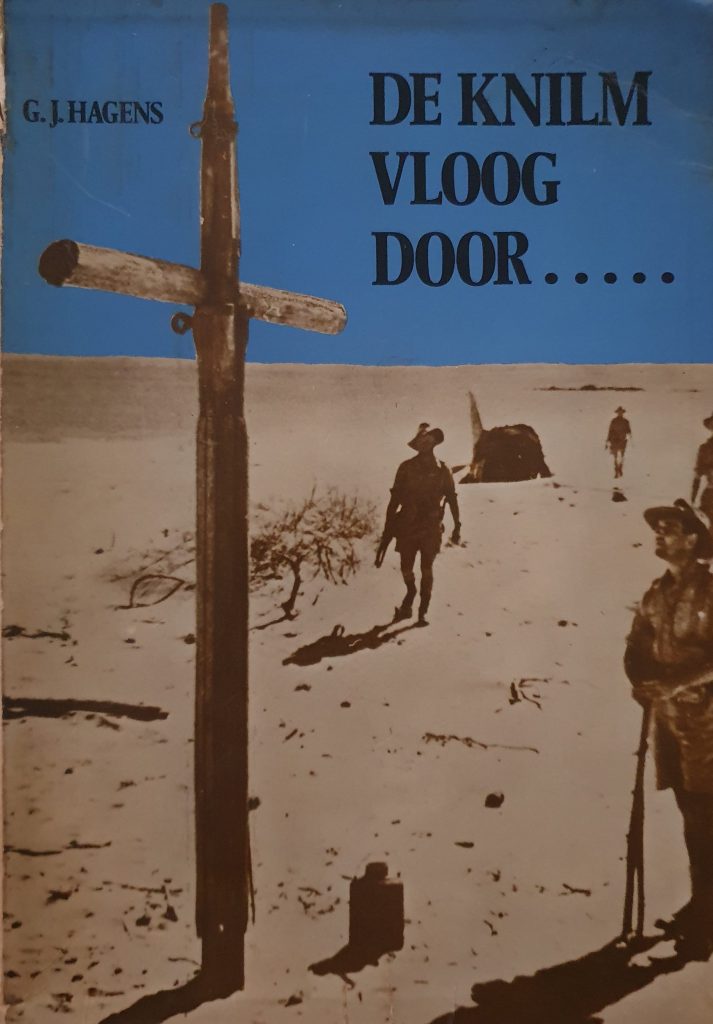
G.J. Hagens, De KNILM vloog door, Haarlem: Bakenes, 1972.
Gerben Tornij, Netherlands East Indies Air Transport Units of the ML-KNIL, 16 January 1943–1 November 1946, third revision, November 2025.
State Library of Queensland photographic collections.
KNILM documents and publications
The following historical advertisements, maps, magazines and publications have been retained as part of the DACC collection:
- KNILM flights to Europe—May 1940
- KNILM flights to Java, Bali and Singapore—July 1940
- KNILM brochure and advertisement—October 1940
- KNILM feature in an in-flight magazine—February 1934
- KNILM–KLM flights to Europe—November 1939
- KNILM flights between Sydney, Brisbane and London—March 1940
- Checkpoint magazine research concerning KNILM aircraft—June 2019
- KNILM in-flight magazine—November 1933
- Bos Atlas maps of KLM and KNILM destinations—1939
- KNILM tenth-anniversary publication—November 1938