From De Uiver to the Netherlands East Indies transport squadrons
Archerfield Airport occupies a distinctive place in Dutch–Australian aviation history. Its association with the Netherlands began with the celebrated visit of the KLM airliner De Uiver in 1934 and expanded through the pre-war services of the Royal Netherlands Indies Airways (KNILM).
Following the Japanese invasion of the Netherlands East Indies in 1942, Archerfield became an important Australian base for Dutch military aviation. Personnel who had escaped from Java assembled there; American-built aircraft ordered by the Netherlands arrived there; and Dutch, Indonesian, Australian and American personnel worked together at the airfield.
Archerfield subsequently became the principal Australian base for the Netherlands East Indies military air transport organisation. Its aircraft connected Brisbane with northern Australia, New Guinea and the Netherlands East Indies and supported the Dutch military, intelligence services and civil administration in exile.
The Dutch military presence ended in 1947, but the people, photographs and surviving records associated with Archerfield preserve an important chapter in the shared history of Australia, the Netherlands and Indonesia.
The establishment of Archerfield Airport
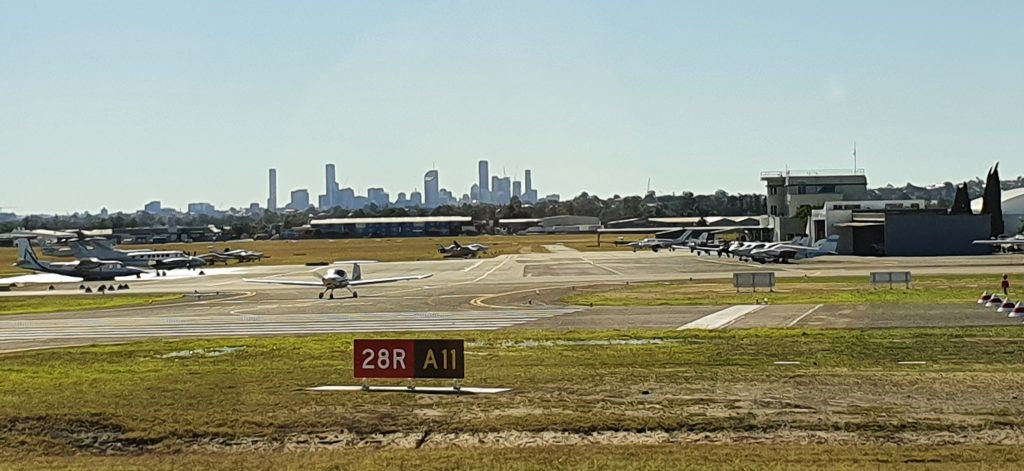
Brisbane’s first aerodrome at Eagle Farm suffered from drainage problems and was unsuitable for the city’s expanding civil aviation requirements. A new aerodrome was consequently developed on approximately 89 hectares at Rocklea. It became known as Archerfield Airport and commenced operations during the early 1930s.
The airport soon became Brisbane’s principal civil aerodrome. Its position on emerging routes between the Netherlands East Indies and Australia made it a natural meeting place for Dutch and Australian aviation.
De Uiver at Archerfield in 1934
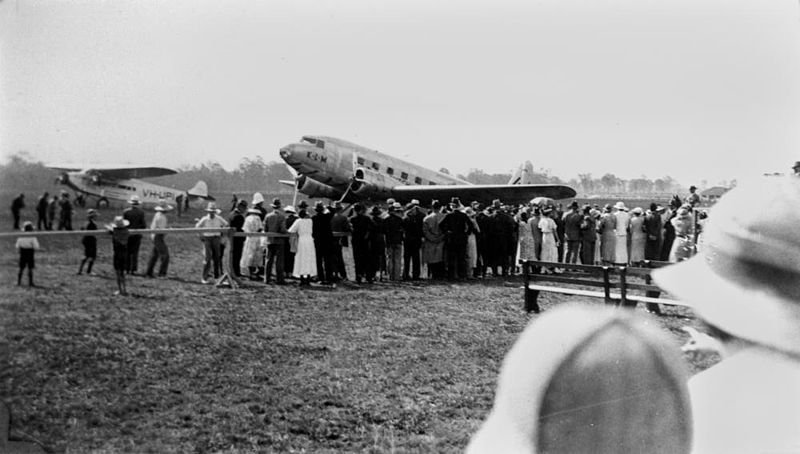
The first celebrated Dutch visit occurred following the 1934 MacRobertson London-to-Melbourne Air Race. The KLM Douglas DC-2 PH-AJU, De Uiver—The Stork—completed the journey in slightly more than 90 hours. It finished second overall and won the handicap section while carrying passengers and mail.
On its return journey to the Netherlands, De Uiver flew from Sydney to Brisbane on 3 November 1934 and arrived at Archerfield at approximately 3 p.m. Its captain, KLM pilot Koene Parmentier, later recalled that it appeared as if the whole of Brisbane had come to welcome the aircraft. The crew was driven past rows of spectators, participated in radio interviews and attended an official dinner.
The people of Brisbane presented the crew with a wallaby to take to the Netherlands. Parmentier recorded that it hopped freely through the aircraft’s gangway. The wallaby did not complete the journey, however, and was found a new home during a stop in Timor.
The aircraft was scheduled to leave for Darwin at 4 a.m. the following morning. Despite the early hour, another large crowd gathered at Archerfield. Spectators surrounded the aircraft so closely that police were unable to clear a path. Parmentier eventually started the engines while holding the brakes, creating an airstream that forced the crowd to move aside and reportedly sent many hats flying through the air. The aircraft departed after a delay of more than an hour.
The complete history of the aircraft and its famous Australian journey is presented in Flight of De Uiver—1934.
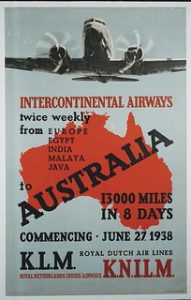
KNILM and the first regular connection with Australia
The Koninklijke Nederlandsch-Indische Luchtvaart Maatschappij (KNILM), or Royal Netherlands Indies Airways, established the first regular Dutch air connection between the Netherlands East Indies and Australia.
A trial postal flight from Batavia to Melbourne took place in May 1931 using a Fokker aircraft named Abel Tasman. Captain Maurits Pattist completed the journey in eight days. The precise Australian stopping places require further confirmation, but the flight demonstrated the possibilities of regular air communication between the Netherlands East Indies and Australia.
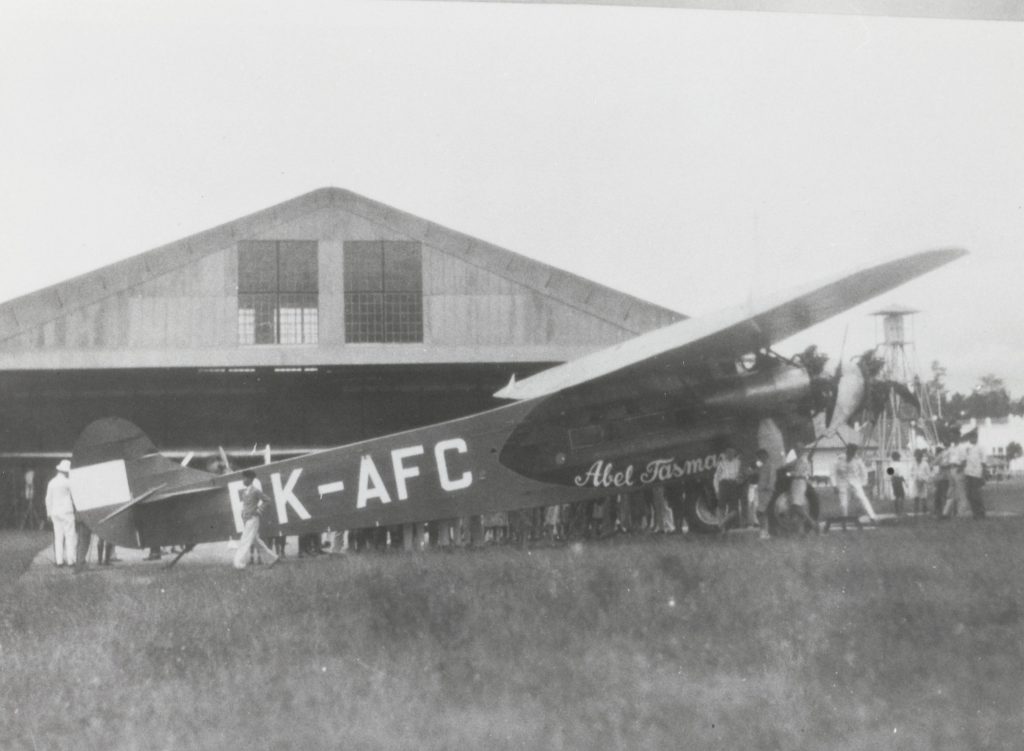
Negotiations over a regular service were prolonged, partly because British interests were concerned about competition with Imperial Airways. A regular KNILM passenger and mail service finally commenced in 1938. Its route connected Batavia, Surabaya, Denpasar, Koepang, Darwin, Cloncurry, Longreach, Brisbane and Sydney.
The Lockheed 14 used on the service carried eight passengers. The journey from Batavia to Brisbane took approximately three days, with overnight stops in Bali and Cloncurry. In January 1939, KNILM Captain Gerson van Messel established a commercial aviation record by flying from Darwin to Sydney in daylight in 12 hours and 12 minutes.
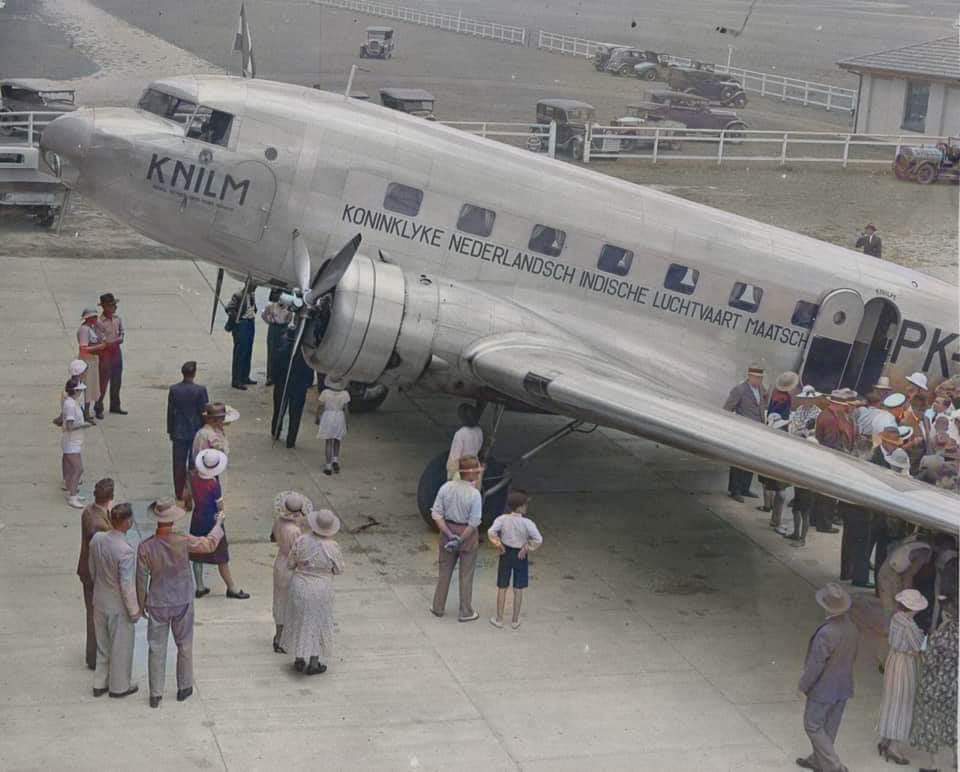
The last regular KNILM service to Archerfield arrived on 19 February 1942, as the Japanese advance transformed commercial aviation into an emergency evacuation operation. The broader history of the airline, its evacuation flights and the fate of its aircraft and personnel is recorded in Royal Netherlands Indies Airline—KNILM and its link with Australia.
Archerfield during the collapse of the Netherlands East Indies
Between January and March 1942, the Japanese conquest of the Netherlands East Indies brought a confused movement of personnel, aircraft, ships, official records and refugees towards Australia. Aircraft originally intended for Dutch army, naval and civil aviation were diverted, evacuated or reassigned.
Archerfield became one of the principal places where Dutch and Netherlands East Indies personnel regrouped. At the same time, American forces were expanding their presence in Brisbane and urgently seeking aircraft and bases from which to support operations farther north.
Several KNILM aircraft reached Australia during the evacuation. Senior personnel and some family members were carried to safety, while many other employees and their families remained behind and subsequently endured Japanese internment. The apparent priority given to senior KNILM personnel caused resentment among Dutch military personnel at Archerfield whose own families remained trapped in Java.
The wider collapse of the Netherlands East Indies, including the evacuations through Broome and the reorganisation of Dutch civil and military authorities in Australia, is covered through the DACC Air Force Research Portal.
A cyclone and an accident at Archerfield
The rapid Allied build-up took place amid inadequate communications and difficult weather. In February 1942, American B-17 aircraft travelling towards northern Australia encountered a major tropical cyclone after their crews failed to receive adequate warning during refuelling at Nouméa.
Archerfield’s wet grass surface also created hazards. During the night of 17–18 February 1942, Lockheed Lodestar LT-922 of the ML-KNIL was struck by Australian DC-3 VH-ACB while the latter was taxiing and braking on the wet airfield.
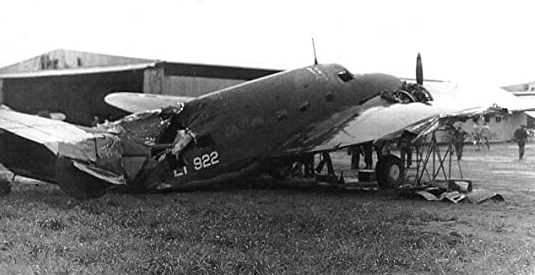 Lockheed Lodestar LT-922 after being struck by DC-3 VH-ACB at Archerfield in February 1942. Photograph supplied via Alan Bovelt. |
Aircraft diverted to Australia aboard ships
Several groups of Dutch-ordered aircraft reached Australia under circumstances that remain only partly documented.
The ML-KNIL had ordered 61 Curtiss-Wright CW-22B training and reconnaissance aircraft from the United States. Forty had reached the Netherlands East Indies before the Japanese invasion and were subsequently captured. The remaining 21 were aboard ships bound for the Netherlands East Indies. These ships were diverted to Fremantle, where the aircraft arrived in March 1942 and were handed to the United States Army Air Forces.
The Netherlands Naval Aviation Service had also ordered 22 Douglas DB-7B light bombers. These aircraft were aboard several ships when Java fell and were diverted to Australia, arriving during March and April 1942. Their complicated subsequent allocation is examined in Aircraft Transfers and Shifting Priorities: The Journey of Dutch-Ordered DB-7/A-20s During WWII.
Contemporary accounts also refer to another 15 aircraft ferried from California and delivered to the ML-KNIL in Australia during early March 1942. Because insufficient Dutch personnel were available to operate them, the aircraft were reportedly repossessed by American forces later that month. Their type and individual identities have not yet been conclusively established and require further research.
The B-25 Mitchells and the formation of No. 18 Squadron
Before the Pacific War, the Netherlands had ordered North American B-25 Mitchell medium bombers to replace the ageing Martin bombers of the ML-KNIL. An emergency allocation of 60 additional B-25Cs was arranged in early 1942, with aircraft to be ferried to British India and Australia for eventual delivery to Java.
In February 1942, personnel of the ML-KNIL Depot Aircraft Division arrived at Archerfield to receive and prepare these aircraft. The principal detachment travelled from Bandung in four Lockheed Lodestars and included Captain W.F. Boot, 18 pilots, seven telegraphists and 14 mechanics. One Lodestar developed serious engine problems between Cloncurry and Brisbane and made an emergency landing at Chinchilla. Boot and four crew members continued to Archerfield by police car, while the aircraft followed after repairs.
The first B-25s reached Archerfield in early March, only days before the capitulation of the Netherlands East Indies. As Java could no longer be reinforced, the aircraft became the subject of urgent negotiations and reallocations between Dutch, American and British authorities. Eighteen were ultimately reserved for Dutch use in Australia, while others entered USAAF or RAF service.
The Dutch personnel at Archerfield formed the nucleus of No. 18 (Netherlands East Indies) Squadron RAAF, established at Canberra on 4 April 1942. The detailed history of the orders, ferry flights, accidents, allocations, personnel and command tensions is preserved in B-25 bombers ordered by the Dutch ended up with the USAAF.
The Netherlands East Indies military transport service
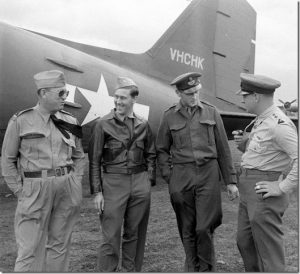
Archerfield’s longest and most important Dutch wartime role developed through military air transport.
Experienced pilots, wireless operators and flight engineers from KNILM and KLM formed the nucleus of the Transport Afdeeling Brisbane, generally known in English as the Netherlands East Indies Transport Section Brisbane or NEI-TSB. It became operational at Archerfield on 16 January 1943 and initially worked with American troop-carrier units.
Dutch crews flew transport and courier services between Brisbane, Townsville and Port Moresby. From February 1943 they operated a demanding night courier service carrying operational communications between General Douglas MacArthur’s headquarters in Brisbane and the Allied command in New Guinea.
The Brisbane and Melbourne transport sections were later combined as No. 1 Netherlands East Indies Transport Squadron. On 15 August 1945, the unit became No. 19 (Netherlands East Indies) Squadron. Its postwar responsibilities expanded rapidly to include relief flights and the movement of personnel, equipment, former prisoners of war and civilian internees.
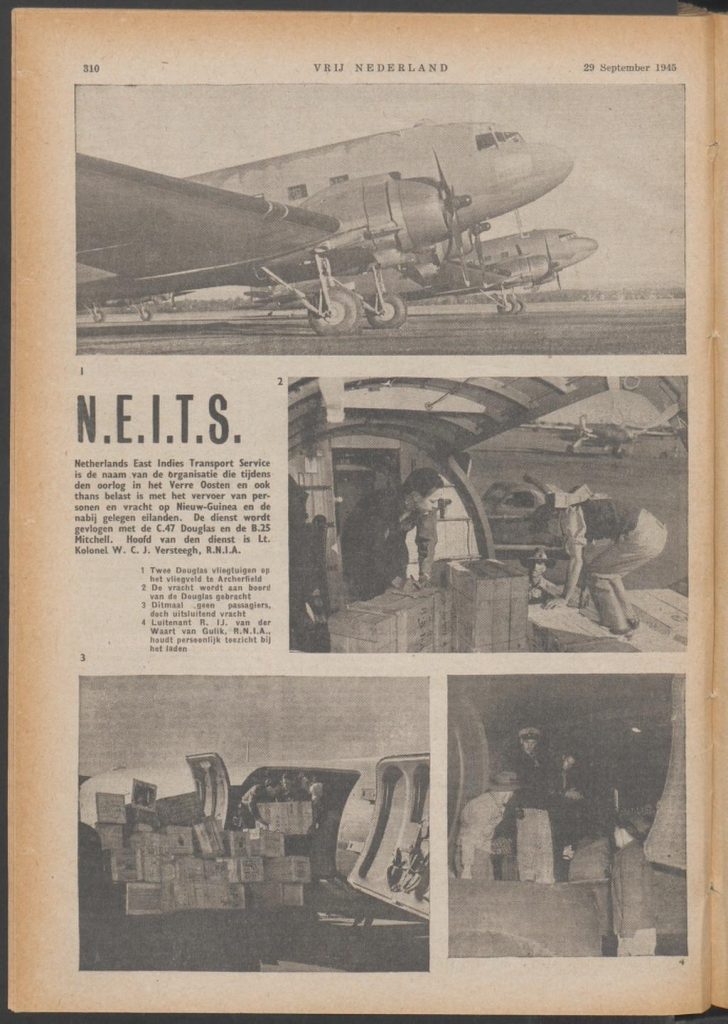
The complete organisational and operational history is presented in Netherlands military air transport services in Australia.
A valuable civilian perspective on the mixed workforce and the daily maintenance and administrative work behind these operations is preserved in Archerfield Memories by Jean White.
Archerfield and the Netherlands East Indies administration in Brisbane
From 1944, Dutch and Netherlands East Indies military, intelligence and administrative organisations were increasingly concentrated at Camp Columbia in Wacol. Archerfield provided the air connection upon which this dispersed organisation depended, carrying officials, communications, supplies and personnel between Brisbane and operational areas to the north.
The airfield supported the Netherlands Indies Civil Administration, the Netherlands Forces Intelligence Service and Dutch military units preparing to return to liberated territories. This relationship made Archerfield the aviation gateway for the Netherlands East Indies Government-in-Exile during the closing phase of the war.
On 18 July 1945, an “Indonesian Night” was held at Brisbane City Hall to raise funds for the Red Cross. Many Dutch and Australian employees from Archerfield attended, demonstrating the social connections that had developed around the shared wartime workplace.
The broader administrative history is examined in Netherlands East Indies Government-in-Exile in Australia, 1944–1946 and The Dutch at WWII Camp Columbia, Brisbane, 1944–1947.
A wartime diplomatic incident
Archerfield was also the departure point for members of the Darja Collin Dance Troupe who travelled to Merauke in 1945 to entertain Allied troops. Questions subsequently arose about passports, exit permits and the description of several performers as Dutch Army nurses. The incident is covered in Dutch-Australian ballerinas performing for WWII Allied troops.
Postwar expansion and political tension
Following Japan’s surrender, No. 19 Squadron began operating more extensively into the Netherlands East Indies and Dutch New Guinea. In February 1946, transport aircraft associated with No. 18 Squadron and aircraft from the Netherlands Naval Aviation Service were transferred to the expanding organisation. No. 19 Squadron became closely associated with the Netherlands Indies Government Air Transport organisation.
Aircraft, personnel and operations were progressively transferred to Kemajoran Airport at Batavia. Archerfield nevertheless remained an important maintenance, training and administrative base during the transition.
These postwar operations occurred against the background of the Indonesian struggle for independence. Australian maritime unions imposed bans on Dutch shipping, and political opposition to attempts to restore Dutch colonial authority intensified. Air transport initially remained outside much of the maritime boycott, increasing the pressure on the Dutch transport organisation. Fuel restrictions and fears of sabotage eventually affected operations at Archerfield as well.
Departure of No. 19 Squadron from Archerfield
No. 19 Squadron was formally farewelled from Archerfield in 1947. A remarkable photograph shows Dutch personnel and family members standing on top of a Dakota, with Archerfield employees assembled below.
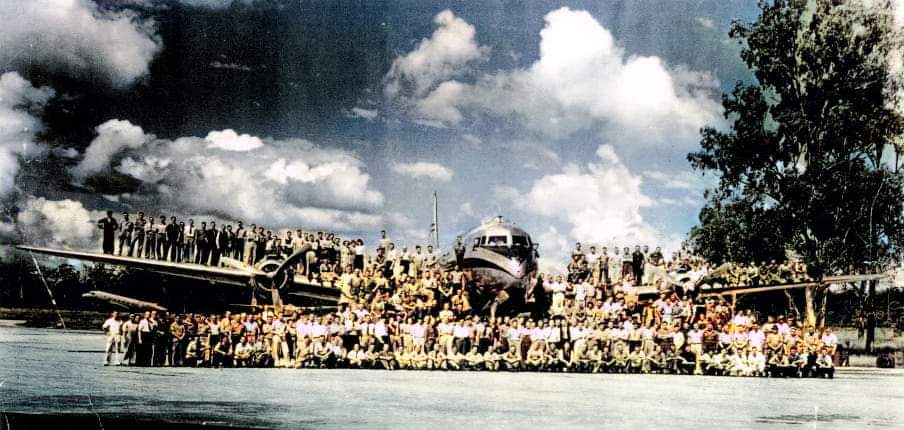
The last Dutch military aircraft departed Archerfield in September 1947, ending more than five years of intensive Netherlands East Indies military aviation activity at the Brisbane airfield.
Government correspondence on the departure of No. 19 Squadron
These documents from the National Archives of Australia record discussions between Prime Minister J.B. Chifley, Minister for Air Arthur Drakeford, Minister for Trade and Customs Ben Courtice, the Department of External Affairs and the Royal Netherlands Legation concerning the withdrawal of No. 19 Squadron from Archerfield in 1947.
The correspondence covers the squadron’s changing status, the Australian trade-union ban on refuelling Dutch aircraft, the removal of its remaining personnel and equipment, and negotiations allowing Dutch aircraft to complete the transfer to the Netherlands East Indies.
Source: National Archives of Australia, M1455, 187.
The last No. 19 Squadron aircraft leaves Brisbane
A contemporary report published in the Daily Mercury on 8 September 1947 described the departure from Archerfield of the last Dutch Army aircraft operating in Australia. It records that the DC-3 carried an Australian crew and the remaining Dutch and Australian members of No. 19 Squadron. It also describes the political tensions, fuel restrictions and heightened security surrounding the final departure.
The report contains graphic and highly partisan descriptions of the Indonesian conflict that reflect the language, attitudes and political circumstances of the period. It is reproduced as a historical source rather than as an endorsement of those claims.
James Saunders—an Australian employee of the Dutch Air Force
James Saunders is believed to be among the Archerfield personnel shown in the farewell photograph above.
During World War II, Saunders served as an engine fitter in the RAAF. He was stationed at Birdum in the Northern Territory, Ambon in the Netherlands East Indies and later Papua New Guinea, where he repaired tank engines for the Australian Army. Some later-model tanks used engines derived from aircraft-engine designs.
After his discharge at the end of the war, Saunders worked at Archerfield for the Netherlands East Indies air transport organisation. His experience illustrates the contribution made by Australian civilian and former military technical personnel to Dutch aviation operations.
When the transport organisation prepared to leave Archerfield for the Netherlands East Indies, Saunders was offered a position there. Many Dutch personnel wanted to return to the Netherlands after having been isolated from their homeland for approximately six years, creating a need for experienced replacement staff. Saunders declined the offer. He also declined an offer from the United States Army Air Forces to work on American aircraft in Guam.
This information was provided by his son, Graham Saunders, in July 2021.
The 1947 Dakota disaster in Moreton Bay
The Dutch presence at Archerfield was also marked by tragedy. On 26 February 1947, an ML-KNIL Douglas Dakota caught fire and crashed into Moreton Bay during a test flight from Archerfield. All six people aboard—three Dutch servicemen and three Australian crew members—were killed.
The complete account is preserved in ML-KNIL Dakota crashed in Moreton Bay—1947.
Further history of Archerfield during World War II
The following document provides a broader account of Archerfield Airport during World War II. It places the Dutch presence within the larger Australian and Allied wartime use of the airfield and is retained as supporting historical material.
Legacy
Archerfield was more than an aircraft base. It was a shared workplace in which Dutch, Indonesian, Australian and American military personnel, former civil airline employees and Australian civilian technicians worked together during a period of invasion, displacement and political upheaval.
The relationships formed there continued after the Dutch military departure. Former Netherlands East Indies residents migrated to Australia, and Dutch migrants settled throughout Brisbane and surrounding districts. The wartime cooperation at Archerfield consequently became part of a much longer Dutch–Australian relationship.
Related DACC articles
- DACC Air Force Research Portal
- Royal Netherlands Indies Airline—KNILM and its link with Australia
- B-25 bombers ordered by the Dutch ended up with the USAAF
- No. 18 (Netherlands East Indies) Squadron RAAF during World War II
- Netherlands military air transport services in Australia
- Archerfield Memories by Jean White
- Joop Gijzemijter—technical superintendent at the NEI Transport Service
- Netherlands East Indies Government-in-Exile in Australia, 1944–1946
- ML-KNIL Dakota crashed in Moreton Bay—1947
Sources and further reading
- Dr P.C. Boer, Early NAA B-25C Mitchells of the ML/KNIL, February 1942–June 1942.
- Dr P.C. Boer, Netherlands East Indies Air Transport Units of the Militaire Luchtvaart KNIL.
- O.G. Ward, De Militaire Luchtvaart van het KNIL in de jaren 1942–1945, National Library of Australia catalogue record.
- Koene Dirk Parmentier, In drie dagen naar Australië.
- Rupert Lockwood, Black Armada.
- Archerfield Airport—history.
- National Archives of Australia records relating to Netherlands East Indies organisations and personnel in Australia.
- Contemporary Australian newspaper reports accessed through the National Library of Australia’s Trove service.
The Dutch Australia Cultural Centre acknowledges Dr P.C. Boer for permitting the use of his detailed research into the wartime history of the ML-KNIL and Peter Dunn OAM for his extensive research into the Netherlands East Indies forces in Australia.
Paul Budde, Brisbane. Originally published in 2021; extensively revised in 2026.